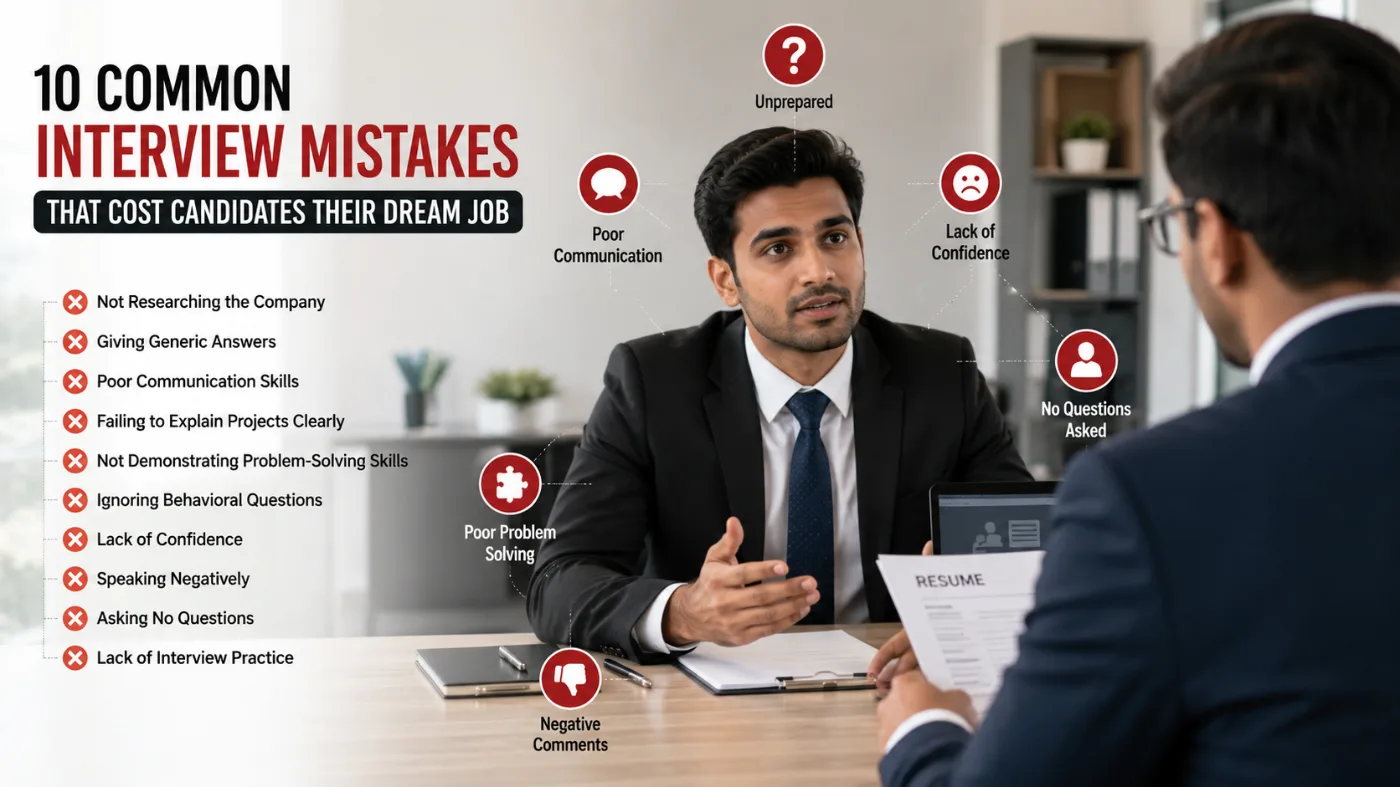
10 Common Interview Mistakes That Cost Candidates Their Dream Job
Discover the 10 most common interview mistakes that cause candidates to get rejected. Learn how to improve your interview performance and increase your chances of getting
10 Common Interview Mistakes That Cost Candidates Their Dream Job
Getting an interview means you've already impressed the employer with your resume. However, many candidates lose great opportunities because of avoidable interview mistakes.
Whether you're a fresher or an experienced professional, understanding these mistakes can significantly improve your chances of getting hired.
1. Not Researching the Company
One of the fastest ways to make a poor impression is showing up without knowing anything about the company.
Interviewers often ask:
What do you know about our company?
Why do you want to work here?
If you cannot answer confidently, it signals a lack of preparation and interest.
What to do instead
Spend 15–20 minutes researching:
Company products and services
Industry
Mission and values
Recent achievements
2. Giving Generic Answers
Many candidates memorize answers from the internet and repeat them word for word.
Interviewers can easily identify rehearsed responses.
For example:
"My weakness is that I work too hard."
This answer has become extremely common and often sounds insincere.
What to do instead
Use real examples from your experience and explain how you've improved over time.
3. Poor Communication Skills
Even technically strong candidates get rejected because they struggle to explain their thoughts clearly.
Common issues include:
Speaking too fast
Giving very short answers
Going off-topic
Using excessive filler words
What to do instead
Practice speaking your answers aloud and focus on structured communication.
4. Failing to Explain Projects Clearly
Many candidates mention projects on their resumes but cannot explain them in detail.
Interviewers often ask:
What problem did the project solve?
What was your role?
What challenges did you face?
What to do instead
Prepare concise explanations covering:
Project objective
Technologies used
Your contributions
Business impact
5. Not Demonstrating Problem-Solving Skills
Companies hire people who can solve problems, not just memorize technologies.
Interviewers want to understand:
How you approach challenges
How you troubleshoot issues
How you make decisions
What to do instead
Share real examples of problems you've solved in previous projects.
6. Ignoring Behavioral Questions
Questions such as:
Tell me about a conflict you handled.
Describe a difficult situation at work.
How do you deal with pressure?
are extremely common.
Many candidates focus only on technical preparation and struggle with behavioral interviews.
What to do instead
Use the STAR method:
Situation
Task
Action
Result
This helps create clear and impactful answers.
7. Lack of Confidence
Confidence plays a major role in interview success.
Signs of low confidence include:
Avoiding eye contact
Hesitating excessively
Frequently saying "I don't know"
What to do instead
Practice mock interviews regularly to become comfortable answering questions under pressure.
8. Speaking Negatively About Previous Employers
Even if you had a bad experience, criticizing previous employers creates a negative impression.
Interviewers may wonder how you will speak about their company in the future.
What to do instead
Focus on growth opportunities and professional reasons for changing jobs.
9. Asking No Questions
At the end of most interviews, recruiters ask:
"Do you have any questions for us?"
Saying "No" can make you appear uninterested.
Good questions to ask
What does success look like in this role?
What challenges is the team currently facing?
How is performance measured?
10. Lack of Interview Practice
Many candidates prepare by reading interview questions but never practice answering them aloud.
This creates a gap between knowledge and performance.
What to do instead
Use mock interviews to simulate real interview conditions, improve communication, identify weak areas, and build confidence before the actual interview.
Final Thoughts
Interview success is not only about technical knowledge. Preparation, communication, confidence, and practice play equally important roles.
By avoiding these common interview mistakes and regularly practicing through realistic mock interviews, candidates can significantly increase their chances of securing their desired job opportunities.
Remember: every interview is a skill, and skills improve with practice.